Product Catalogue
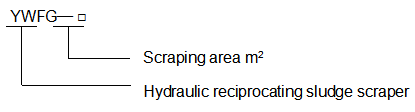
YWFG Type Reciprocating Sludge Scraper
Purpose
The hydraulic reciprocating sludge scraper is suitable for applications where the sludge discharge concentration needs to be high and the amount of sludge is relatively small, such as municipal water treatment plants, municipal sewage treatment plants, water purification plants, industrial wastewater treatment plants, and air flotation tanks, etc.
Structure and working principle
The hydraulic reciprocating sludge scraper is driven by a hydraulic drive device. It makes the connecting rod system perform reciprocating motion, driving the sludge scraping frame and the sludge scraping device. The sludge at the bottom of the tank is scraped into the sludge collection trough at the edge of the tank. The sludge in the sludge collection trough is discharged through the sludge discharge port. The clarified water after sedimentation of the sludge is discharged from the overflow weir at the upper part of the sedimentation tank. The entire system of the hydraulic reciprocating sludge scraper consists of four parts: the electronic control system, the hydraulic drive system, the connecting rod system, and the sludge scraping frame.
Main features
1. High reliability in motion: Simple structure, slow speed, natural water lubrication, and high reliability in motion.
2. Suitable for existing rectangular sedimentation tanks: Most sedimentation tanks do not require bottom reconstruction. The design of the reciprocating sludge scraper greatly reduces the requirements for sedimentation tanks and can adapt to various widths of sedimentation tanks.
3. Simple structure, few and light components, and can be installed without special lifting equipment or other complex auxiliary devices.
4. It has a sludge thickening function. The unique structure of the scraper enables the sludge scraper to further thicken the sludge at the bottom of the tank during the reciprocating sludge scraping process. The sludge concentration scraped to the sludge collection tank can reach 3%.
Model description