Product Catalogue
YQX type bridge-type sludge suction machine
Purpose
The YQX-type bridge suction scraper is mainly used for sludge suction and discharge in rectangular secondary sedimentation tanks of municipal sewage treatment plants or horizontal flow sedimentation tanks of waterworks. Oil and scum skimming devices can be added according to user requirements.
Structure and working principle
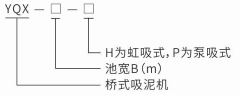
This device adopts a mobile bridge type. There are two types of sludge suction methods: siphon type and pump suction type. Generally, the siphon type sludge suction machine is selected for the ground-level sedimentation tank, and the pump suction type sludge suction machine is selected for the semi-underground sedimentation tank.
When the sludge suction machine is not in operation, it stops at the water inlet end. When the sludge suction machine is working, the traveling vehicle follows the instructions of the electrical control. When moving downstream, the skimming plate is first lowered to scrape and collect the floating scum and skim it into the steel skimming trough at the pool end. When moving in the reverse direction, the skimming plate is lifted off the liquid surface to prevent the floating scum from moving backwards. By controlling the solenoid directional valve, the flushing water enters the steel skimming trough. The sludge and water at the pool bottom are then discharged into the sludge collection trough at the pool side through the suction pipe (by siphon or pump suction) for further treatment. It works back and forth in this way to achieve the purposes of sludge suction, sludge discharge, and scum skimming.
Main features
1. Reciprocating sludge suction and skimming, high efficiency, simple structure;
2. Bilateral drive, synchronous transmission of rollers on both sides, smooth operation;
3. Unidirectional skimming, the pool surface is relatively clean;
4. The bottom of the pool is flat;
5. Simple operation, the operation of the equipment can be directly controlled locally/remotely.
Model description